
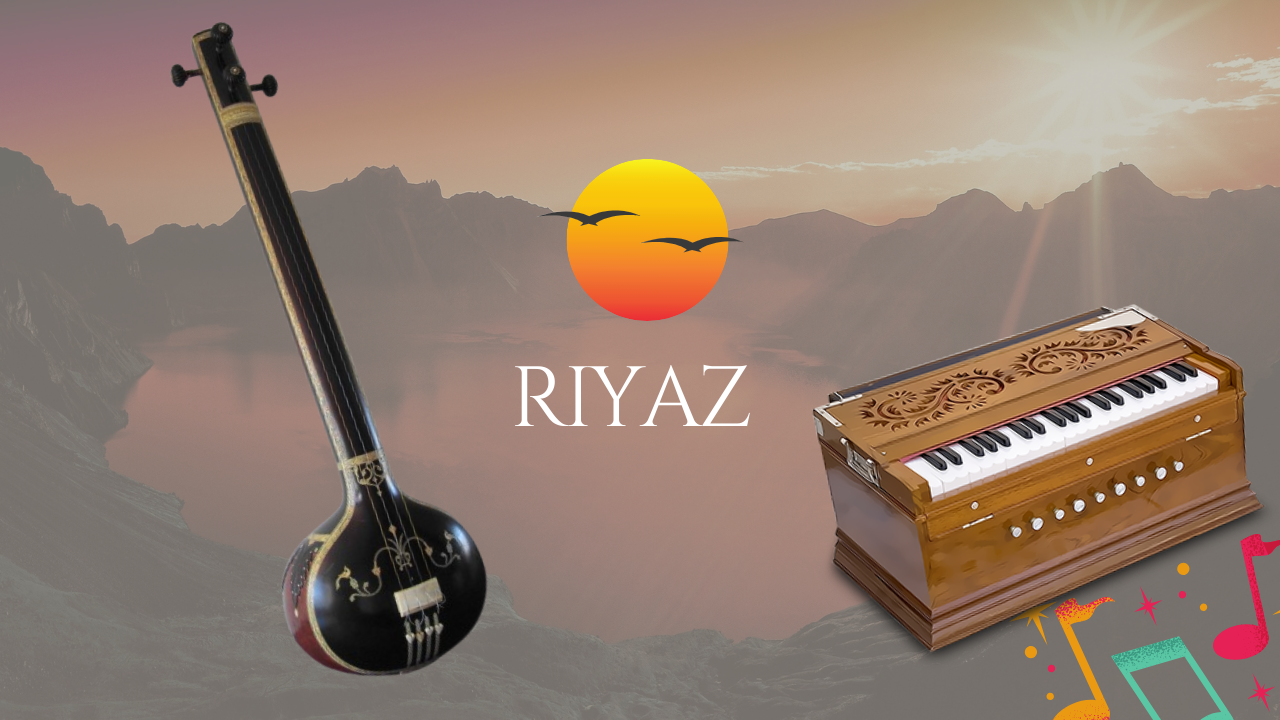
Riyaz is the heart of Hindustani Classical Music. Whether you are a beginner or an experienced vocalist, the sound you practice with has a big impact on your pitch stability, tonal quality, and overall musical growth. Among the most commonly used instruments for practice are the Tanpura and the Harmonium. Both have been part of Indian music for generations—but which one is better for daily riyaaz?
The answer depends on what you want to develop in your voice. Each instrument offers unique benefits, and understanding these differences will help you choose wisely.
Understanding the Tanpura: The Sound of Pure Swara
The Tanpura is not a melody instrument—it does not play tunes or compositions. Instead, it produces a continuous, resonant drone of Sa, Pa (or Ma), and the upper Sa. This drone becomes a sonic canvas over which the singer practices swaras.
Why Tanpura Is Powerful for Riyaz?
1. Perfect Pitch Alignment
The Tanpura helps the singer lock into the exact frequency of each swara. Because the sound is continuous and rich in natural overtones, it trains the ear to recognize micro-variations in pitch that a harmonium cannot reproduce.
2. Develops Sur Sensitivity
If your note even slightly deviates, the Tanpura reveals it instantly. Over time, this sharpens your ability to sing perfectly in tune.
3. Enhances Vocal Resonance
Singing with a Tanpura encourages open-throat singing and natural resonance. Your voice sits “inside” the drone and fills the frequency gaps around it.
4. Creates meditative focus
The calming, immersive sound of the Tanpura helps singers enter a deep, stable state of concentration—ideal for long riyaaz sessions.
Best for:
✔ Sur training
✔ Long notes (akar sadhana)
✔ Alankar practice
✔ Raga exploration
Understanding the Harmonium: The Melodic Guide
The Harmonium is a melody instrument. It plays notes, phrases, and compositions, making it useful for teaching and learning.
Why Harmonium is Useful for Riyaz
1. Helps beginners identify swaras
The keys make it easier to locate and memorize Sa, Re, Ga, Ma… and so on. This is especially helpful during the initial stages.
2. Guides while learning bandish or raga phrases
Students can follow the harmonium notes to understand raga structure, pakad, and movement.
3. Helpful for those who struggle with pitch
Singing along with played notes gives clear guidance, though it does not develop natural pitch sensitivity like the Tanpura.
4. Best for practicing compositions
When you are learning a bandish, taan, or bol, the harmonium is a supportive companion.
Best for:
✔ Learning new ragas
✔ Practicing compositions
✔ Teaching and classroom learning
✔ Vocalists at very early beginner stage
Tanpura vs. Harmonium – Which Should You Use?
For pure vocal development → Tanpura is unmatched
It trains your ear, improves resonance, and builds accurate sur.
For learning structure and compositions → Harmonium is excellent
It teaches movement, phrases, and ragas with clarity.
Ideal approach for most vocalists:
Use both—but at different stages of practice.
Riyaz with Tanpura
For Sur steadiness, long notes, alankars, ragas and voice warm-up.
Singing or Performances with Harmonium
For compositions, bhajans and songs
Why Modern Vocalists Prefer Tanpura Apps
Today, digital tanpuras have made it easy to practice anytime.
They are portable, customizable (Sa, Pa, Ma, Ni), and maintain stable pitch.
This makes Tanpura-based riyaaz accessible to everyone—not just those who own the instrument.
Conclusion
Both Tanpura and Harmonium hold an important place in Hindustani Classical Music. But for strict vocal improvement, the Tanpura always wins because it trains your voice at the most fundamental level—sur.
Use the harmonium when you need guidance and clarity in learning, but rely on the Tanpura when you want your voice to truly grow.
If your goal is to develop a stable, beautiful, and raga-perfect voice, let the Tanpura be your main companion in daily riyaaz.
Leave a Reply